
Why Direct Screen Printing Still Beats Transfers
Walk into most print shops today and you'll be steered toward DTF or other transfers. They're fast to set up and great for small orders. We offer them too. But screen printing is quietly becoming a lost art, and that's a shame, because for most shirts it's still the better product.
A print versus a patch
A transfer is a printed film with a layer of adhesive, pressed onto the shirt. It sits on top of the fabric. A direct screen print is ink pushed through a mesh screen straight onto the garment, then heat-cured into it. The difference is easy to feel: a screen print moves with the shirt, while a transfer can feel like a sticker.
It lasts
Properly cured plastisol ink holds its color and detail for the life of the shirt. Transfers can crack, fade or lift at the edges after enough trips through the washer and dryer. If the shirt is meant to be worn for years, like an event shirt people collect or a uniform your crew wears every day, that durability matters.
It gets cheaper as you go
Screen printing has setup, since every ink color needs its own screen. But once the screens are made, each additional shirt costs less. For a dozen shirts or more, screen printing is usually the better value too.
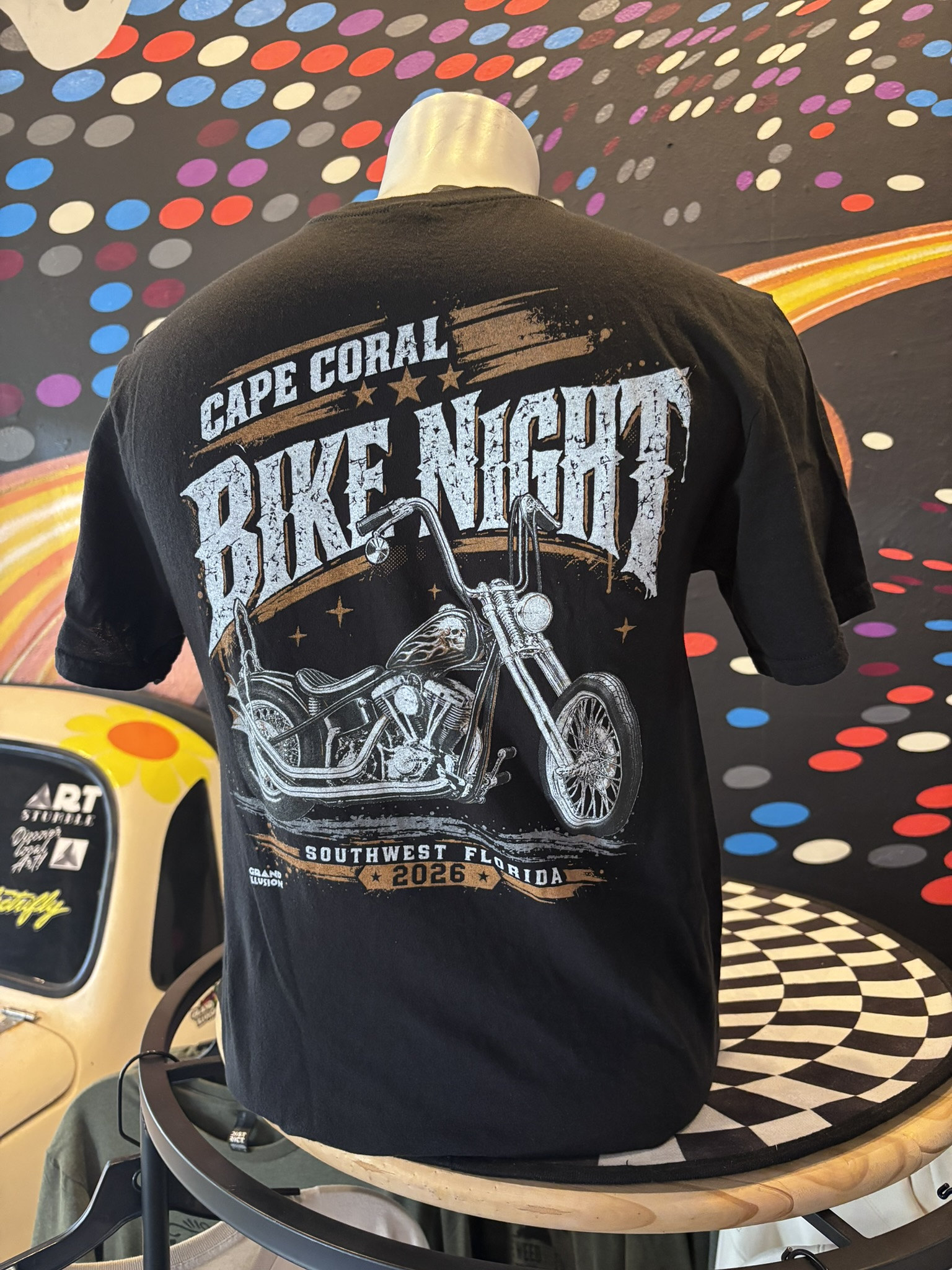
Our Cape Coral Bike Night shirts are a good example: distressed lettering, fine chrome detail and metallic-tone accents, all direct screen printed. Riders wear them year after year.
When a transfer makes sense
For a handful of shirts, full-color photo artwork, or names and numbers, DTF and vinyl are the smart choice, and we'll tell you so. For everything else, ask about screen printing. Your shirts will feel better and last longer.